
+++ DACIA will launch an electric version of the Sandero in 2027 as batteries and drives will probably be taken from the Renault 4 E-Tech and 5 E-Tech. Dacia boss Denis Le Vot told. The Dacia Spring, which is manufactured in China, is likely to be discontinued. In 2024, the Romanian brand, which belongs to Renault, sold 676.340 vehicles worldwide. The bestseller was the Sandero. The 4.09 metre hatchback has been one of the cheapest cars for years and was the bestselling vehicle in Europe in 2024. The Sandero has been on the market since 2007. The second generation followed in 2013 and the third was launched in 2021. In the 4th iteration, there will also be an electric version for the first time. The car is to remain a small car around 4.10 metres long, i.e. not an SUV. In addition to the normal Sandero variant, there will also be a higher stepway version with an off-road look, as before. As early as 2021, a Renault manager stated that they were working on an electric Sandero. At the time, there was talk of a market launch in 2026. In 2023, Le Vot then specified that the car could be expected in 2027 or 2028. Now the same manager is talking about 2027. So far, the Spring is the brand’s only electric car. It received a facelift in 2024; there were no technical changes. In Europe, sales fell drastically in 2024. In Germany, too, the figures plummeted by two thirds: 14.366 new registrations in 2022, 12.406 in 2023 , but only 3.655 in 2024 . One of the reasons for this was probably the cancellation of subsidies, which make up the highest percentage in the lowest price segment and also affect the most price-sensitive customers. Unlike the Spring, which is built in China, the electric Sandero will probably be built in Europe, which will spare it the EU punitive tariffs, if they still exist. Whether it will roll off the production line at Dacia’s main plant in Romania remains to be seen. The plant would first have to be converted for the production of electric cars. Alternatively, the car could be built in an already “electrified” Renault plant: The 5 E-Tech is produced at the “ElectriCity” plant in Douai (south of Lille), while the 4 E-Tech is manufactured around 80 km to the east in Maubeuge. Both models are based on the AmpR Small platform. The Sandero Electric will also be based on this architecture. It could then take over the batteries with 40 and 52 kWh as well as the front-wheel drives with 70, 90 and 110 kW. As before, the newcomer will compete in the lowest price segment. Within the Group, it will compete against the Leapmotor T03 and the Twingo E-Tech, which will be available from 20.000 euro in 2026. Other rivals will be the Citroën ë-C3, the Hyundai Inster and the Dongfeng Box. Dacia will probably do everything in its power to beat its competitors on price and continue to offer the cheapest electric car in Europe. The Spring is available from just €18.995 in the Netherlands. The Sandero Electric will not be the only electric car from Dacia. Another electric car is to be launched by the end of the decade. This is likely to be a somewhat larger SUV. One possibility would be a Duster Electric, i.e. an electric version of the 4.34 metre long Duster. However, this model is to be presented after the Sandero Electric. +++
+++ FORD boss Jim Farley has made it clear he’s not interested in building boring cars. Time and again, he’s emphasized that Ford’s mission is to deliver “iconic” vehicles that excite and inspire enthusiasts. Or at least, that’s the idea. Now, Farley is doubling down on this vision, stating his goal for Ford to become “the Porsche of off-road”. Recently, Ford unveiled 2 new versions of its signature muscle car: the Mustang RTR with Dark Horse parts and the Mustang GTD Spirit Of America Edition, featuring a patriotic livery. While these new models capture the attention of car enthusiasts, Ford’s biggest sales drivers are its off-road vehicles, which accounted for 20% of the company’s 2 million global sales in 2024. Speaking on the sidelines of the Detroit Auto Show, Jim Farley said: “Ford wants to be the No. 1 undisputed off-road brand in the world. We want to be the Porsche of off-road”. This vision goes beyond production vehicles like the extensive Raptor line-up, as it extends to Ford’s growing presence in off-road motorsport. A prime example is the Dakar Rally, where the Raptor T1+ secured a third place in the overall standings. Jim Baumbick, Ford’s Vice President of Product Development Operations and Quality, explained the deeper purpose behind these motorsport efforts. He said the company isn’t just racing for trophies but to “learn, improve the product, and feed that back into our product development to advance our capabilities”. A similar approach has been applied to Ford’s Mustang Dark Horse trim, which draws inspiration from its GT3 racers competing at Le Mans. Farley emphasized that his focus at Ford is squarely on creating forward-thinking products: “Our industry is in the midst of a disruption. But one thing remains true; great products always win”. Building on this, Baumbick added, “We’re not here to make toasters on wheels or churn out generic commodity vehicles. For us, it’s all about creating an emotional connection”. Since Farley stepped into the CEO role in 2020, Ford has launched a wide range of vehicles designed to appeal to enthusiasts. From the Maverick Lobo to the Ranger and Bronco Raptors, Mustang Mach-E Rally and the high-performance Mustang GTD, the company says it’s creating models that cater to niche markets while maintaining a broader appeal. This strategy is expected to continue in the future, with more special variants. Looking ahead, Ford is reportedly planning to expand its Tremor line-up to cover most of its pick-up trucks and SUVs, including models beyond the Bronco and Bronco Sport. Furthermore, Ford’s Australian division will soon introduce a Super Duty trim of the Ranger, contributing to the ever-increasing line-up of the midsize pickup. +++
+++ HONDA is embarking on a $100 million employee re-education program to give workers the basic foundations of the new technology that undergirds the development and production of tomorrow’s software-packed, artificially intelligent, autonomous-driving electrified vehicles. +++
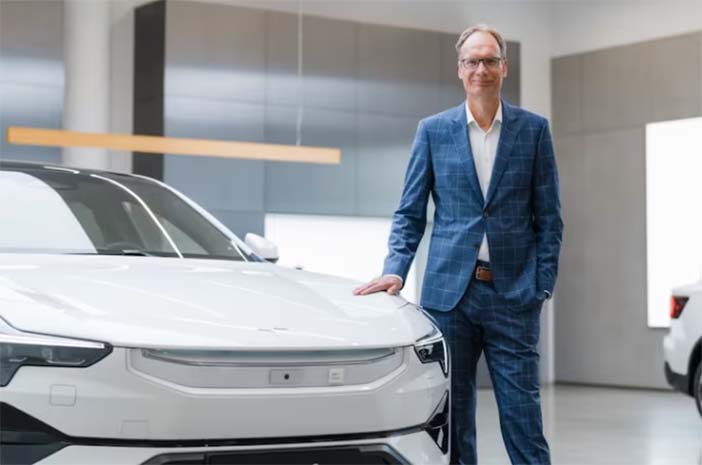
+++ Michael LOHSCHELLER was very much a ‘suit’ in his previous big car-company jobs. At Opel, for example, he was constrained by the company’s many difficulties: a long string of loss making years, an odd relationship with Vauxhall (which contributed less and less to the physical cars) and the constant need to please Carlos Tavares who saw very little but the red ink. As a result, his management style was competent but conservative and his utterances in interviews were short and careful. Which made the amusing, wise-cracking person I’ve just encountered in a Polestar guise seem like a different person. The new-edition Lohscheller seems to have an impressive freedom to operate. He also seems to love Polestar not only for the way its cars drive (although he can talk enthusiastically about EV performance) but also for the importance of the company’s objective of offering genuinely zero-carbon transport and leading the automotive world in sustainability. He’s a natural great-outdoors man (lean and athletic, because his lifelong hobby is running), and when we met in London, he had just put away a good few miles along the Thames Path. He knows London well, having studied and worked here in the past, and enjoys coming back. Talking about the Polestar job, Lohscheller readily acknowledges its great appeal. “I have a fantastic team”, he said. “The cars are very, very good, and I’m convinced people want them and need them. In the past, I’ve worked in places with systems that were in place for many years and weren’t going to change. Here, everything we do helps to shape something very important. I’m super optimistic”. +++
+++ NISSAN was one of the original proponents of electric vehicles as they introduced the Leaf in 2009. Despite a massive head start, the company doesn’t have much to show for it other than the Ariya. That’s not to say the automaker didn’t try as we’ve seen numerous projects announced and then delayed or killed off entirely. The most memorable example is the Infiniti LE from over a decade ago, but more recently, the company delayed a pair of electric sedans that were slated to be built in Canton, Mississippi. The revisions continue today as Nissan has decided against building a subcompact electric crossover in Canton. The model was reportedly codenamed the PZ1L and it would have been larger than the Leaf, but smaller than the Rogue. While it sounds like America will miss out on the model, the vehicle is still slated to be built at the company’s Sunderland plant in England. However, Nissan still has plans to build 2 other electric crossovers at their U.S. facility. Nissan’s Brian Brockman told they want to focus on the other EVs that will be made in Mississippi. He went on to suggest they’ll be better suited for the American market and sell in higher volumes. While a number of questions remain, it’s believed slower than expected electric vehicle adoption played a role in the decision. Trump’s return to the White House has also added a lot of uncertainty as he has promised to “end the Green New Deal” and “revoke the electric vehicle mandate”. He’s also expected to try eliminating the $7.500 clean vehicle tax credit, which would make EVs significantly more expensive. +++
+++ The POLESTAR 2 will not be succeeded by the recently confirmed ‘7’ and instead get its own direct replacement towards the end of the decade. The news, confirmed by the new CEO Michael Lohscheller, dispels previous suggestions that the new Range Rover Evoque-sized 7 would slot into the line-up in place of the popular liftback. Instead, he made it clear that Polestar was building and would maintain a 5-tier model line-up for the future: the 2 (small hatch), 3 (large SUV), 4 (large crossover), 5 (four-door performance coupé), 6 (ultra-low-volume sports car) and 7 (mid-sized crossover). Lohscheller revealed that the 2’s replacement would be the second model after the 7 (the marque’s first European model) to adopt the platform that Polestar plans to use for every new model in the future. Its identity is still to be officially revealed, as is the location of the marque’s first European plant, although Geely’s new plant in Slovakia looks a strong contender. Polestar won’t yet put a date on the new 7’s arrival, let alone on replacing the 2, which Lohscheller reckons has “years to go”. He cites the 2 as his personal favourite model, because he believes it has a timeless quality that embodies Polestar’s core design values and has done so much to establish the company (170.000 sold) since it was launched in 2020. He claims last year’s changes to the 2 improved it so much that other manufacturers would have called it a new model. Lohscheller is promising Polestar’s backers a sales volume improvement of 30% to 35% a year over the next 3 years. “This is an ambitious target”, he said, “but we are not dreaming. We now have 3 good cars in our showrooms and orders for the first quarter are up 37%. Even better, 55% of those orders are for our 2 newest cars, Polestar 3 and 4”. The biggest sales drive, he believes, will be Polestar’s adoption of a network of retailers well versed in selling cars, demonstrating and financing them, explaining their sometimes unfamiliar equipment. Polestar’s number of sales outlets will grow over the next 18 months and cars will be sold from dedicated spaces alongside Volvo dealerships. Lohscheller believes there will be very little sales cannibalisation; he is surprised and impressed by buyers’ clear perception of Polestar as a distinct brand. The company will “transition away” from its former network of ‘Spaces’ in large shopping centres. The United Kingdom is Polestar’s biggest market, believes Loscheller, partly because it is more agile and adaptable to change than others in Europe. “You can get close the customers here”, he said, “and if you need to change the way things are done, you can do it quickly”. The changes seem to be bearing fruit: in the 4th quarter of last year, British Polestar orders doubled. Another advantage, Lohscheller believes, is the presence of Polestar’s Coventry R&D centre, where the advanced, high-performance 5 is undergoing final development prior to a launch later this year. “I tell Coventry people that I hope they’re really proud of this car”, he said, “with its advanced bonded-aluminium technology, its 900 hp and it’s 800 Volt technology. It’s a halo car, and will probably be the most expensive model we offer. But it will be one of the most advanced cars in the world”. Lohscheller also revealed that Polestar’s future design direction will take a modest change of course, following the arrival of its new, ex-Audi design boss, Philipp Römers. “What we’ve achieved so far is really good”, he said, “but I’m asking Philipp to highlight the performance of our cars a little more. I don’t believe they look quite as capable as they actually are. They should look a little more confident; they are maybe bit too modest. But I don’t expect radical changes, and how the designers actually achieve these subtle changes will be up to them”. +++
+++ 2024 was another rough year for STELLANTIS . Sales in the United States dropped 15%, marking the 6th consecutive year of declines. Not exactly the kind of streak you’d want on your résumé. The silver lining, however, is that Stellantis finally took a hard look at its bloated American inventory and began addressing the issue. By year’s end, the company had managed to trim down its stockpile, though it’s clear there’s still plenty of work ahead. New data reveals that as of January 6, 2025, there were approximately 2.88 million vehicles in total inventory across the US. The average in December was sitting at 75 days’ worth of inventory, but some brands slipped below this, including Land Rover, GMC, Acura, Porsche, Kia, Subaru, Honda, BMW, Toyota, and Lexus. For much of the year, several Stellantis brands had more than twice the industry average, but things have started to change. Cox Automotive reports that in December, Dodge’s inventory fell by as much as 52% year over year. However, it still has an excess supply, sitting at 122 days, only trailing Lincoln and Jaguar. Dodge’s inventory was slightly up from the 111 days it had in November. Stellantis has done a good job of cutting Chrysler inventory by roughly 40%, bringing it down to 79 days. Jeep supplies have also dropped 14% year over year to 114 days. Additionally, Ram supplies have dropped to 107 days. Rewind to November and things weren’t looking so good for Stellantis. Jeep inventories were sitting at 129 days, and Ram’s were 128 days. Lincoln and Jaguar continue to battle with high inventories. Lincoln has 146 days’ worth of supply, while Jaguar has at least twice the industry average; equating to a minimum of 150 days’ worth of supplies. This is primarily because the British brand hasn’t released any new models in recent years. Lincoln’s swollen inventories come despite reporting a healthy 28% increase in sales last year, shifting 104.823 units. +++
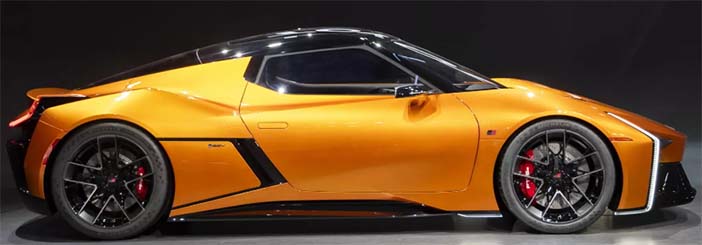
+++ TOYOTA has all but confirmed it is working on a mid-engined sports car under its Gazoo Racing sub-brand. The company’s plan to build a new two-seat sports car has been on the radar for a while, but following a press conference at the 2025 Tokyo Auto Salon earlier this month, we now know it’ll be powered by a brand-new turbocharged four-cylinder petrol engine, and could arrive as early as next year. This is a change from the initial plan to launch an all-electric sports car, which was previewed by the FT-Se concept in late 2023. The move also bucks a trend established by Porsche, Alpine and Lotus, all of whom have committed to introducing their own fresh electric sports cars over the next couple of years. Instead, the new Toyota will feature a mid-mounted ‘G20E’ petrol engine; an all-new unit previewed in the wild mid-engined GR Yaris M Concept, also revealed at this year’s Auto Salon. When I spoke to Toyota GR engineering boss Naohiko Saito at the show, he told me: “This engine represents the beginning of a new development that will come from motorsport before we put it into production. We always learn lots with this way of working”. To this end, prototypes of the GR Yaris M Concept will race in the Japanese Super Taikyu series, giving the new engine a comprehensive round of development before hitting the road. This is something Toyota also did with its Lexus LFA supercar, running prototypes for two years in the ADAC Nürburgring 24 Hours race. The new engine’s output has still to be confirmed, but Toyota says it’s aiming for the new G20E to be more powerful and more efficient than the current 2.4-litre turbo unit found in Toyota and Lexus models overseas. This could put the baseline power figure at around 300 hp, rising to up to 400 hp in its more highly tuned applications. Toyota has suggested that versions of this engine can support as much as 500 hp in motorsport trim, although emissions regulations could see numbers this high tricky to meet in a road car. However, with the use of Toyota’s hybrid modules, figures of this scale could be possible for future road-going applications. In the new sports car, though, the combustion engine will be mounted in the chassis transversely, as it is in the GR Yaris M Concept. The motor will probably be paired with the eight-speed automatic transmission that was developed specifically by Gazoo Racing for the GR Yaris, and is also found in overseas models such as the GR Corolla and Lexus LBX Morizo RR. I don’t know much more about the car’s chassis or its specification, but a mixed-metal construction is likely, combining high-strength steel and aluminium to help keep the weight and costs down. Toyota also suggested the new model will probably feature all-wheel drive, with Saito telling: “this layout is new for us, but we have found in our initial testing that the combination of an all-wheel-drive mid-ship layout offers the best layout for high-performance driving”. Toyota has lots of experience with mid-engined models, selling the MR2 over the course of 3 decades between the mid-eighties and the late 2000s. But despite a close connection to these past icons, we expect the new sports car to feature a significantly more contemporary design, taking its lead from the aforementioned FT-Se concept. The body itself should retain similar exaggerated forms to the concept, highlighted with strong rear haunches, angular surfacing and bodywork that looks almost shrink-wrapped over the engine and chassis. The switch to an internal-combustion powertrain will have an effect on how the car manages the airflow around the body, but we don’t expect big side intakes will be necessary; instead, the engine will draw in air from the front of the car and underneath. This notion is supported by the GR Yaris M Concept, because it does without any obvious side-mounted air intakes. Around the rear, I also expect similar led lighting to the concept’s to be carried across, as well as the aggressive rear diffuser and a small ducktail spoiler. As with most GR models, the base car will probably be able to be customised with more aggressive aero components such as a high-mounted rear wing and aero flicks mounted on the front bumper. The compact cabin will be strictly for two, and offer good visibility because of the low scuttle height; just as in a Lotus or Porsche. The dashboard will also be pared back and very driver-focused, with compact digital interfaces and little in the way of flashy design elements. +++
+++ VOLKSWAGEN wants to intensify its partnership with Rivian. This was stated by Oliver Blume, CEO of the Wolfsburg-based company, in an interview. The idea is to make better use of economies of scale by bundling components and placing joint orders. “The Volkswagen Group can offer great advantages to a manufacturer like Rivian”. The collaboration between Volkswagen and Rivian started in the middle of last year. The initial idea was to combine the software expertise developed by the US start-up with the firepower of the world’s second largest automotive group. Specifically, the creation of the joint venture between Volkswagen and Rivian would accelerate the development of the software-oriented electric cars that will be built on the Scalable Systems Platform (SSP) that will create the next generation of zero-emission cars from Wolfsburg. The deal involves $5 billion in funding from Volkswagen, which can thus get its hands on new technologies that will enable the group to catch up at least some of the time it has lost ground on the battery-powered models of the future, with the electric Golf in the lead. The Volkswagen-Rivian marriage does not only benefit the German half of the pair. Rivian, as emphasised by its founder and CEO RJ Scaringe, has the opportunity to use the support of an automotive giant to expand into other markets. Both in terms of marketing and possibly production, the timing is good. Last year, Rivian introduced new models (R2 and R3) that are smaller than the R1S and R1T, and they will also be launched in Europe. Having a partner like Volkswagen can only help in this growth process. Now, going back to Blume’s latest comments, the cooperation could extend to other areas, such as purchasing management and supplier relations. In short, it is not out of the question that a single automotive group could be created in the future. After all, this is the trend, as Stellantis or, in the supercar sector, Rimac-Bugatti have already shown. +++